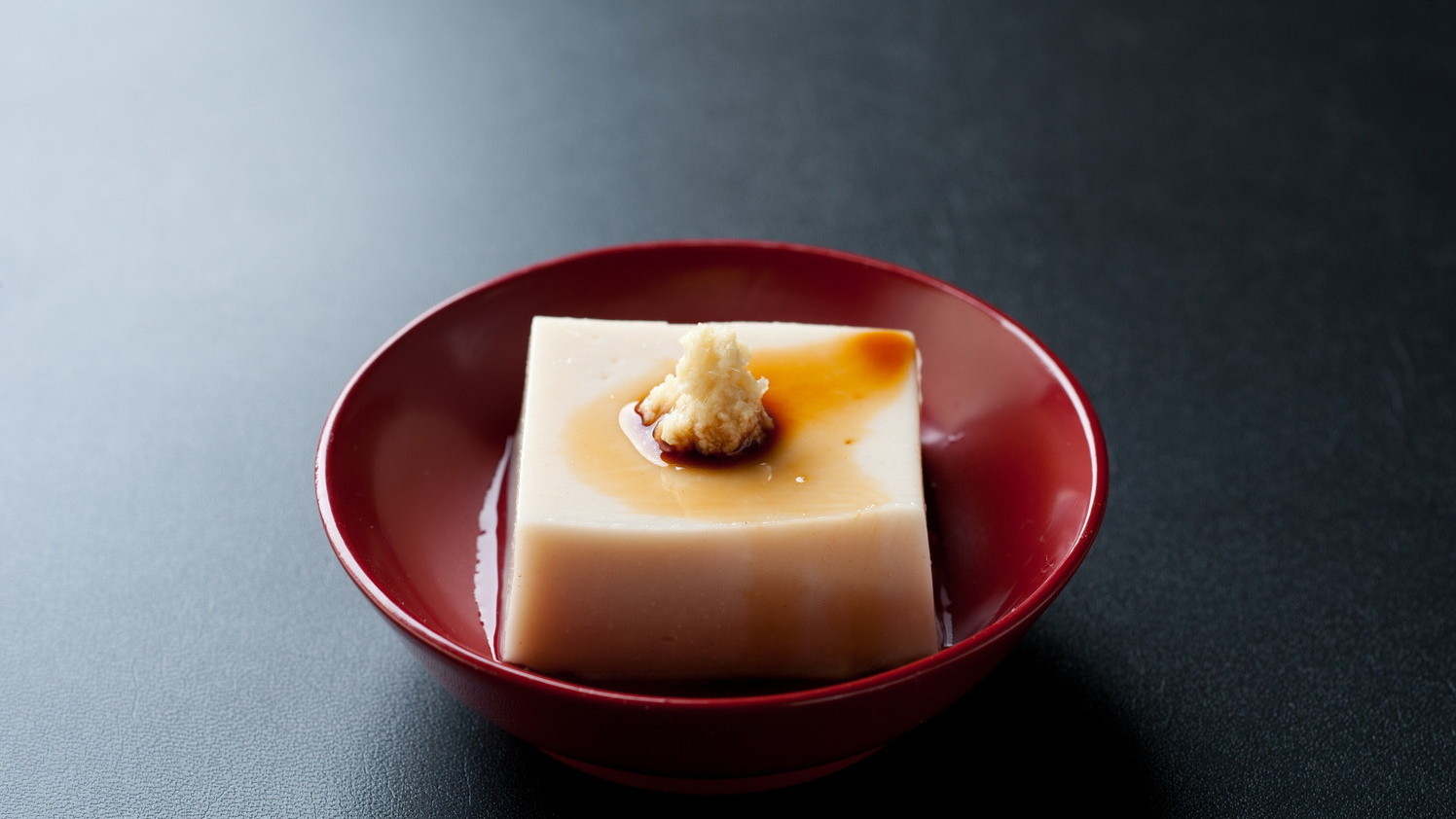
Goma Dofu (Sesame Tofu) is a type of Japanese shōjin ryōri (Buddhist vegetarian cuisine), originally created and eaten by monks training at Mount Kōya in Wakayama Prefecture.
Despite its name—“goma” meaning sesame and “dofu” meaning tofu—it contains no soybeans. The name comes from its tofu-like appearance.
It is traditionally made using ground sesame and kudzu starch (kuzuko), specifically “honkuzu,” a high-grade starch made from 100% kudzu root.
The sesame seeds are hulled and carefully ground until smooth, then mixed with water and kudzu starch and gently heated and stirred until thickened. The mixture is poured into molds and cooled to set.
Although the process is labor-intensive, it is considered an important part of spiritual practice in temples where cooking is also viewed as a form of training.
At home, goma dofu can be made more easily using store-bought sesame paste and potato or corn starch.
It is typically served simply with wasabi soy sauce or vinegar-miso sauce, and is rarely used as an ingredient in other dishes like regular tofu.